

OOC: The Playable Anime review
 Analysis by GetAllApps
I approached OOC: The Playable Anime as a reading app first, not as a conventional game. Its premise is appealing if you want an anime-flavored story that responds to your imagination, but that also sets a particular expectation: the experience depends on enjoying the act of reading and making choices, rather than on fast action or a familiar, finished novel. My overall impression is that it is worth trying for readers curious about interactive fiction, while anyone expecting a polished action game or a standard ebook should pause and consider what they actually want from a story.
Where the experience can feel unfamiliar
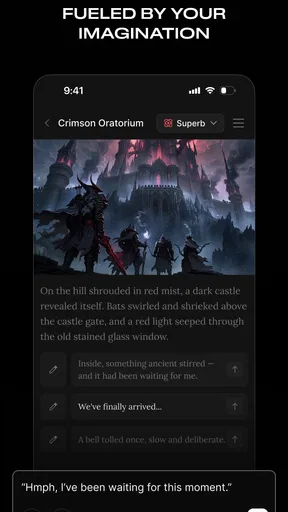
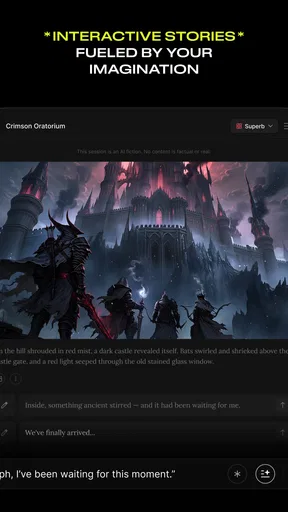
The first adjustment is understanding what kind of attention this app asks for. A traditional anime game often puts its appeal in animation, battles, or collecting characters; a conventional digital book gives you a largely fixed text to read at your own pace. OOC sits closer to interactive fiction: the invitation is to engage with an unfolding story rather than simply watch or consume it. That can feel fresh, but it may also take a little patience if you arrive expecting the app to explain its appeal immediately.
The store’s short description is simply “OOC,” so it gives little practical guidance about what a new reader should expect. I would treat the broader idea as a starting point, not a promise of a particular genre, branching system, or presentation style. The useful question is whether you enjoy imagining possibilities while reading. If you prefer a clearly structured plot that moves at a fixed pace, the open-ended framing may feel less satisfying than a conventional book.
In my view, the main friction for a newcomer is not necessarily difficulty; it is uncertainty about how to approach the experience. Interactive stories can invite a reader to linger over decisions, whereas ordinary novels encourage you to follow the author’s sequence. A good way to settle in is to read attentively and respond naturally rather than trying to guess a hidden “best” choice. That keeps the experience closer to reading for pleasure and avoids turning every moment into a puzzle to solve.
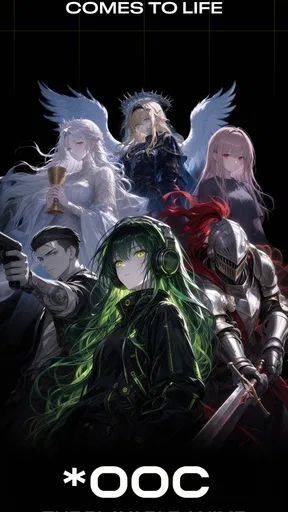
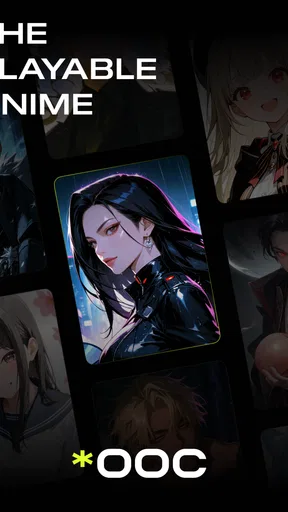
It is also worth setting expectations around the word “anime.” The description establishes an anime-novel identity, but that alone does not tell you whether the app relies on animation, voiced scenes, or any particular visual feature. I would not install it solely in expectation of a specific production style. Think of the appeal as a story-led experience with anime inspiration, and decide whether that sounds enjoyable before comparing it with a visually elaborate game.
Simple checks before settling in
OOC is a free Books & Reference app from OOC, with optional in-app purchases listed across a broad range, from $1.39 to $142.99 per item. That makes it sensible to begin with the free experience and decide whether the writing and format suit you before spending anything. If a purchase prompt appears, take a moment to read what it covers and whether it is relevant to how you want to use the app. There is no need to treat an optional purchase as a prerequisite for deciding whether the story itself works for you.
The app is rated Teen, so it is not positioned as a children’s reading choice. I would keep that in mind when deciding whether it is suitable for a younger reader, especially if you are choosing an app for someone else. The age guidance is more useful than guessing from the anime framing alone: animation-inspired presentation does not automatically mean content intended for children.
It runs on Android starting with version 7.0, and the current version is 0.1.27. Before troubleshooting a launch issue, check that the device meets that minimum and that the installed app is current in the app store. Those are basic checks, but they prevent a lot of wasted effort: a story app cannot be judged fairly if it is being run on an unsupported system or an outdated installation.
There is also a practical distinction between a device being compatible and the experience feeling comfortable. Reading is more demanding when you are distracted, rushing, or trying to follow a story in tiny fragments. I would open it when you can give it a few uninterrupted minutes, rather than testing it while switching constantly between tasks. That simple change helps you tell whether the pacing suits you instead of confusing a distracted session with a problem in the app.
A calmer way to recover a disrupted session
If the app behaves unexpectedly, I would first separate a story question from a technical one. If a passage feels surprising, that may be part of the narrative rather than evidence that something has gone wrong. Reread the last section you remember clearly and consider what you selected or understood before assuming progress has been lost. For interactive fiction, a moment of uncertainty can be part of reading, so a quick pause is often more useful than tapping repeatedly.
If the screen itself stops responding or the app closes, start with low-risk steps: close and reopen the app, then check for an available update. If the issue persists, restart the device and try again when the connection is stable, particularly if the app is having trouble loading content. These are general troubleshooting steps, not a guarantee that every problem has the same cause. I would avoid deleting app data or reinstalling immediately, because those steps can affect saved state in some apps.
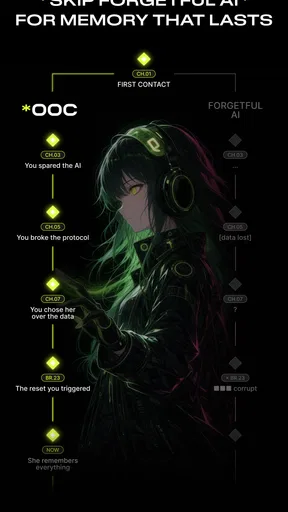
That leads to a useful habit for any choice-driven reading session: take note of where you are before leaving, especially if you are unsure whether a scene has finished loading or a choice has registered. You do not need a complicated tracking system. Remembering the last clear passage gives you a reference point if you return later and the app opens somewhere unexpected. It also helps distinguish a genuine continuity issue from simply forgetting a detail between sessions.
When a purchase or account-related screen is involved, slow down rather than repeatedly confirming. Check the wording on the screen and the purchase controls in the app store before proceeding. This is especially sensible because the listed purchase range spans small and substantially larger amounts. I would treat each purchase as a separate decision, not assume that one payment unlocks everything or that every item is necessary.
When the cause may be outside the story
Not every frustrating session points to a problem with OOC. A poor connection can interrupt apps that need to retrieve content, while low device storage or a busy phone can affect performance more generally. If the app stalls, check whether other apps are also struggling and whether the device has enough free space. That quick comparison is more informative than deciding at once that the story app is broken.
Reading conditions matter too. If you are trying to follow a narrative in a noisy place or while tired, it is easy to miss a detail and then feel that the next scene does not make sense. I would revisit the preceding passage before blaming the app’s writing or continuity. This is particularly useful for stories that ask you to imagine the situation rather than presenting every detail in a fixed, cinematic sequence.
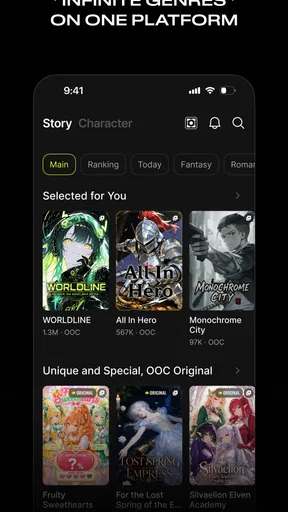
It helps to be honest about personal preference as well. Someone who dislikes making choices during a story may find the format annoying even when the app is functioning normally. Likewise, a reader looking for a library of standard reference books, textbooks, or straightforward novels may be better served by a conventional ebook or reading app. OOC belongs to a narrower corner of the category: story-led, anime-inspired interactive reading.
The app has an average rating of 4.3 from around 29,000 ratings, alongside roughly 4,500 written reviews and more than a million installs. That suggests a sizable audience has tried it, but popularity cannot tell you whether its particular reading style fits your taste. I would use those figures as context, then make the decision based on your interest in interactive anime fiction and your comfort with the app’s opening experience.
Who will get the most from it
I can see OOC working best for someone who wants a story to occupy a short break without needing the reflexes, coordination, or long sessions associated with many games. For example, you might open it during a quiet part of a commute or while winding down at home, read a section, and return later when you have a moment. The key is to treat it as a reading habit rather than a task to complete quickly. If you enjoy imagining what could happen next, that lighter, reflective use is a natural fit.
It may also appeal to anime fans who want to try a more participatory form of storytelling without committing to a large action game. The trade-off is that the pleasure comes from engagement with the narrative, not necessarily from familiar franchise characters or a specific show’s world. If you need a recognizable series, a deep combat loop, or a conventional novel with a guaranteed linear arc, a different option will likely suit you better.
Compared with a standard ebook, OOC’s central attraction is the idea of a story shaped through reader involvement. A conventional ebook is usually the stronger choice when you want predictable page-by-page reading, broad reading tools, or a fixed work you can simply finish. Compared with a visual novel or anime game, OOC is better approached as a reading-centered experience unless its actual presentation proves otherwise on your device. That distinction matters: choosing by the word “anime” alone can lead to disappointment if what you wanted was mostly animation or gameplay.
It is free to install, which lowers the barrier to trying it, but the in-app purchase range means I would be deliberate about spending. Start by seeing whether you enjoy the basic rhythm and writing. If you do, then assess any paid option on its own terms. If you do not, spending more is unlikely to solve a mismatch between your preferred kind of entertainment and interactive reading.
My practical verdict
OOC: The Playable Anime is an intriguing choice for readers who want anime-inspired fiction to feel more participatory than a standard book. I like the premise and the low-commitment way a free app can let you test whether this style appeals to you. The strongest reason to try it is not a promise of a particular feature, but the chance to see whether you enjoy reading a story with room for your imagination to take part.
I would recommend it to curious anime fans, interactive-fiction readers, and anyone who likes giving a narrative their attention in short, relaxed sessions. I would skip it if you mainly want action, a conventional reference library, or a tightly defined linear novel. The most useful first step is to check device compatibility, open the app when you have a little quiet time, and judge the experience by the story itself rather than by assumptions about what an anime game should include. With that expectation, OOC is an easy-to-try option, though not an automatic fit for every reader.
Pros and cons
Pros
- Anime-style visuals give the game a distinctive look.
- Playable characters offer varied combat styles.
- Story scenes add context to the battles.
- Character customization supports personal play styles.
- The anime theme may appeal to genre fans.
Cons
- Combat may feel repetitive over longer sessions.
- Progress can depend heavily on character upgrades.
- Some devices may struggle with detailed effects.
- The anime presentation may not suit every player.
- Online features can require a stable connection.


